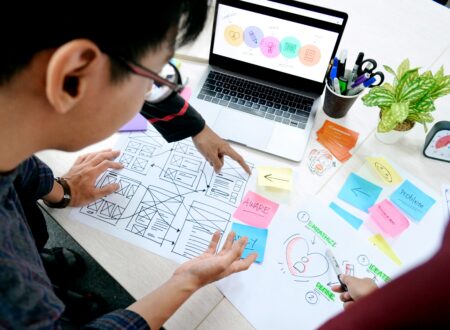

Understanding the Concept of Design Thinking
Design thinking is a creative and practical approach to solving problems. It focuses on understanding needs, generating ideas, and turning those ideas into real solutions.
It is not limited to designers—it can be applied in business, technology, and everyday life. The goal is to think clearly, creatively, and strategically.
Smart design thinking starts with a problem and ends with a meaningful solution. It is a process that combines logic with creativity.
Turning an idea into reality begins with the right mindset.
Starting with Understanding and Research
Every great design begins with understanding. Before creating anything, it is important to know the problem, the audience, and the purpose.
Research helps you gather insights. It allows you to see what works, what does not, and what can be improved.
Understanding user needs is key. A design should solve a problem or improve an experience.
When you start with clarity, your ideas become more focused and effective.
Good design is built on strong understanding.
Generating Ideas and Exploring Creativity
Once you understand the problem, the next step is to generate ideas. This stage is about creativity and exploration.
Brainstorming helps you come up with multiple solutions. Do not limit yourself—explore different possibilities.
Some ideas may not work, and that is okay. The goal is to find the best solution through exploration.
Creativity allows you to think beyond the obvious. It helps you create something unique and valuable.
Innovation begins with open thinking.
Turning Ideas into Practical Solutions
Ideas become powerful when they are turned into action. This is where design thinking moves from imagination to reality.
Creating prototypes or simple versions of your idea helps you test how it works. It allows you to see what needs improvement.
Practical solutions focus on usability and effectiveness. A design should not only look good—it should work well.
Testing and refining your idea improves its quality. Each step brings you closer to a better result.
Execution is what transforms ideas into real outcomes.
Improving Through Feedback and Iteration
No design is perfect in the first attempt. Feedback plays a crucial role in improving your work.
Listening to users and understanding their experience helps you make better decisions.
Iteration means making small changes and improvements over time. This process helps you refine your design.
Learning from feedback ensures that your solution meets real needs.
Continuous improvement is the key to success in design thinking.
Creating Impact with Smart Design Thinking
Smart design thinking is about combining creativity with purpose. It helps you create solutions that are meaningful, practical, and effective.
When you follow this process, your ideas become more structured and impactful.
Design thinking encourages innovation, problem-solving, and adaptability.
It helps you approach challenges with confidence and clarity.
In the end, turning an idea into reality is not just about creativity—it is about execution, improvement, and purpose.